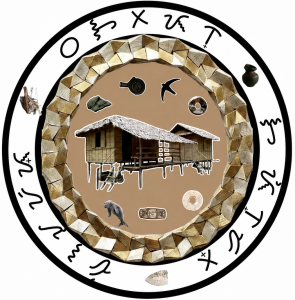

The earliest known human settlement in El Nido dates back to around 12,000 BC in Dewil Valley, located in present-day Barangay New Ibajay on the eastern coast. The inhabitants of this period were already using stone tool technology. Evidence from the same site also reveals the earliest known cremation practices, dated between 9,000 and 7,000 years ago. The inhabitants of Dewil Valley also encountered the modern Asian tiger, which later became extinct.
By 1,580 BC, figurative pottery began to emerge, crafted by communities living along the coasts of present-day Bacuit Bay and in Dewil Valley. Archaeological finds from Leta-Leta Cave on Lagen Island, located on the western coast of El Nido, offer valuable insight into their way of life. Among these artifacts, the most renowned is the Yawning Jar, which resembles a yawning human figure. From Dewil Valley, the most notable figurative artifact is the Sinalakan Turtledove, a vessel that combines features of both a turtle and a bird.
During the 5th century AD, a trading community flourished in present-day Sibaltan. It was called Batacalan, and when the Spanish colonizers arrived, they renamed the place Sta. Monica. Its inhabitants practiced agriculture, engaged in trade, and maintained an organized system of governance. Archaeologists have unearthed Tang and Ming Dynasty jars in the area, along with human remains and postholes, suggesting a thriving settlement. This community is believed to have begun declining in the 15th century, eventually losing its status as a town and being reduced to a mere barrio by the 1800s.
In the 16th century AD, as Batacalan continued to decline, a Tagbanua village called Talindak emerged in present-day Langeb-Langeban in Barangay Aberawan. Talindak is the earliest recorded place name associated with present-day El Nido. The term means “a chance appearance in a place,” referring to the belief that the site was enchanted and could sometimes not be found. The settlement was later relocated to present-day Cabigsing in Barangay Buena Suerte.
In the 17th century, Cuyonons began migrating to Paragua (modern-day Palawan) – first to accompany Spanish friars in Christianizing the area and to assist Spanish authorities in governing the newly ceded lands from the Sultanate of Borneo. Later, Cuyonons came to Paragua to fish and cultivate rice, as farmlands in Cuyo Island could no longer sustain their growing population. Pangco boats became a vital means of fishing and transporting people and trade goods between Cuyo and Paragua. Over time, the Cuyonons outnumbered the native Tagbanuas of Talindak and Batacalan.
Talindak was later renamed Bacuit by the Spaniards in the 1800s. In 1888, it became a pueblo (town), after previously serving as a visita (barrio) under the town of Taytay, then the capital of the former province of Paragua. Early Spanish settler families included the Vázquez, Cánovas, Río, Fernandez, and Rey clans. On March 16, 1916, Bacuit had its first Filipino leader, Adriano Abadiano, who became Municipal President by virtue of the Jones Act of 1916 issued by the United States government, allowing Filipinos to be in the legislature and local government units. In 1937, Rosalio Castro became its first mayor. On June 17, 1954, through Republic Act No. 1140, the town received its present name, El Nido, inspired by the edible nests of swiftlets found in its limestone cliffs. El Nido is Spanish for “The Nest.”

