Pangko or “sakayan” is the traditional boat of the Cuyonons, an ethno-linguistic group that originated from Cuyo Island in the province of Palawan. During the Pre-Spanish period, when agricultural areas in Cuyo Island could no longer support its growing population, the Cuyonons used Pangko to reach Paragua, the modern day Palawan Island, to plant rice. Some Cuyonons opted to live permanently in Paragua and began populating the island. From then on, pangko became a regular mode of transport from Cuyo to Paragua and vice versa carrying both passengers and merchandise.
Pangko was still used in Sibaltan until the 50’s. But when a storm capsized several pangkos in Sibaltan Bay in the 60’s, it eventually evolved into a motorized version. The motorized version was later on replaced by the modern day “lantsa.” During the 70’s, a trade route from Sibaltan to Manila was established using the bigger “batil” and the use of lantsa for the Sibaltan-Cuyo route began to dwindle.
When Dr. Carlos Fernandez, a Cuyonon anthropologist, visited Sibaltan in 2012, he asked the officers of Sibaltan Heritage Council, Inc. [SHCI] if they have pangko in Sibaltan. The officers then realized that they knew nothing about Pangko. SHCI then conducted a research, asking the elders about pangko. They learned that pangko was indeed used in Sibaltan and got a detailed description of the said ship from the elders.
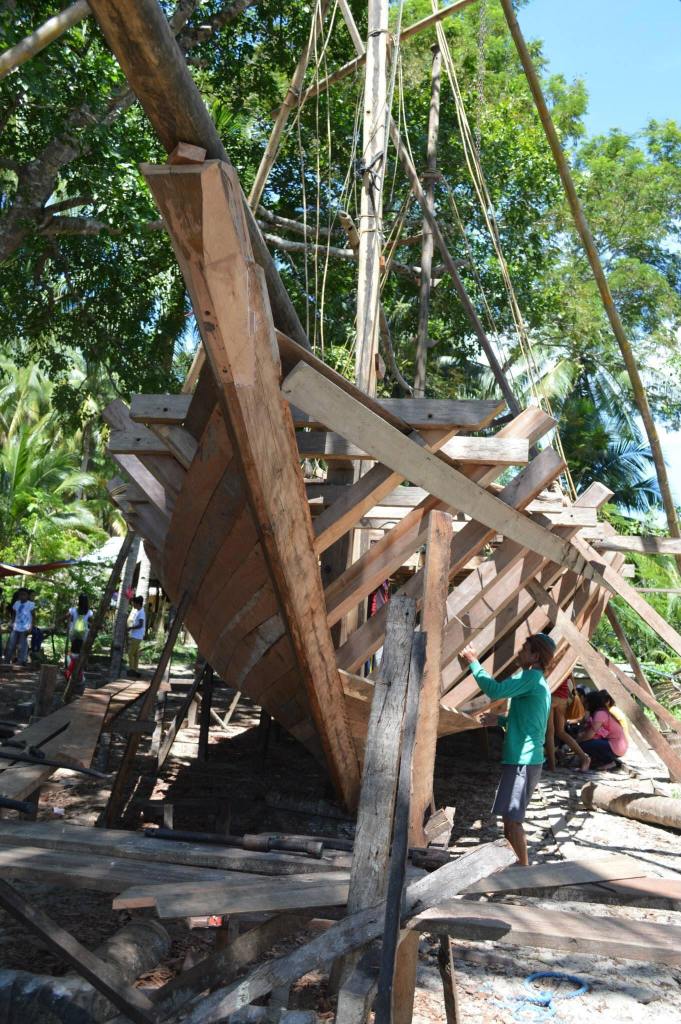
On July 2013, American Alliance of Museums granted the Ancient Shores, Changing Tides project proposed by Ms. Lace Thornberg. SHCI then received exhibit funds from this project which they allotted for the construction of Pangko replica. Five carpenters were tasked to build the said replica and construction began on April 30, 2014. They were led by Mr. Pablo Eleazar, the only living carpenter in El Nido who experienced building pangkos.
Pangko replica was inaugurated in October 24, 2014 and served as an ethnographic museum of Cuyonon Maritime culture. Pangko was the second museum built in the Municipality of El Nido after the Balay Cuyonon Museum, the replica of the traditional Cuyonon house, which was also built in Sibaltan in 2012.

