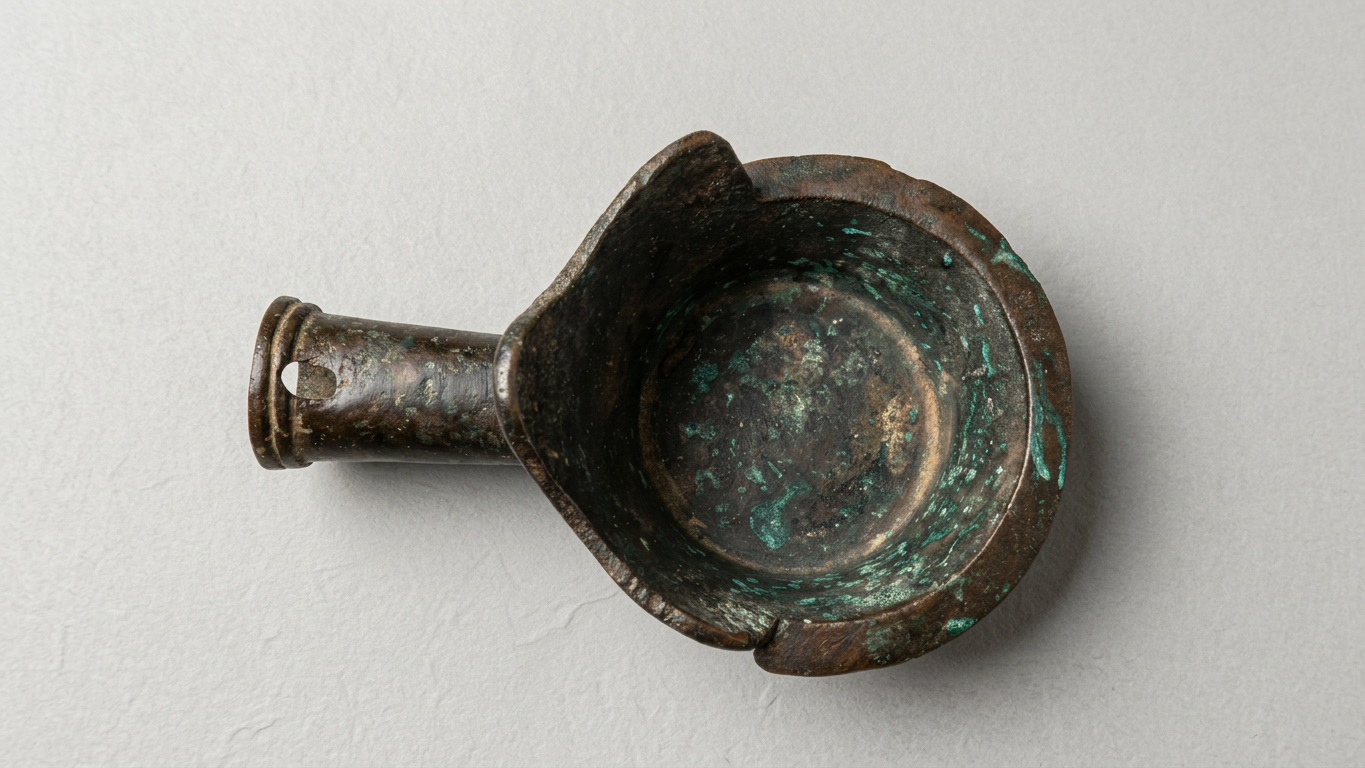
The oldest known type of flat iron documented in El Nido is locally called prensa. It was first recorded in Barangay Manlag during the municipality’s Cultural Mapping in 2020. Subsequent cultural-mapping activities and community validation confirmed the continued existence of the same type of implement in Barangays Masagana and Bagong Bayan.
The prensa in Manlag is owned by the Daquer-Garcia family, while the one in Bagong Bayan is owned by the Mabaquiao family. The prensa in Masagana is part of the collection of the late Gloria Fernandez. These artifacts were documented in the book Cultural Properties of the Municipality of El Nido, Volume 1, 2nd Edition. The book provides detailed information about the prensa, stating:
According to Maria Christine Garcia, one of the members of the Daquer-Garcia family, they had a smaller prensa for small clothing and a bigger prensa for heavier clothing but lost them as time went by. The remaining prensa was left by their great grandfather to their grandfather, Victor Daquer.
Prensa is a Spanish word meaning “press.” Another term, prensa de corona, was used for a type of press with a crown-like design. However, the Spanish term for a flat iron is plancha, which eventually evolved into the present Tagalog term plantsa. The term plancha was already used during the early stages of the Spanish colonial period. This raises the question: Why was the oldest known type of flat iron in El Nido called prensa instead of plancha?
The term prensa appears to have been associated with this type of flat iron in the late 19th to early 20th century, around the period when this model became known in the Philippines. Its use may be related to two methods of pressing clothes: the prensa de paa, which involved pressing clothes using the feet, and the prensa de corona, which involved pressing clothes with a hand-held flat iron. The latter may have simply been called prensa when it did not have a crown-like design.
Another possible scenario is that prensa may have been used as a product or trade name by local or foreign manufacturers at the time. If the term appeared alongside the introduction of this particular type of flat iron in the late 19th to early 20th century, it is possible that manufacturers or merchants used prensa to identify the product, and the name eventually became familiar among Filipino consumers.
Though the origin of the term prensa remains unknown, the Heritage Tourism Division will find relevant documents that would lead to the origin of the name. Current available data about the artifact are already collected. The available data were used to registered it at both the local and national levels, for its preservation. At the local level, the artifact was formally adopted through Resolution 23-145 passed by the Office of the Sangguniang Bayan in 2023. Subsequently, it was submitted to the National Commission for Culture and the Arts (NCCA) for inclusion in the Philippine Registry of Cultural Properties (PRECUP).

