
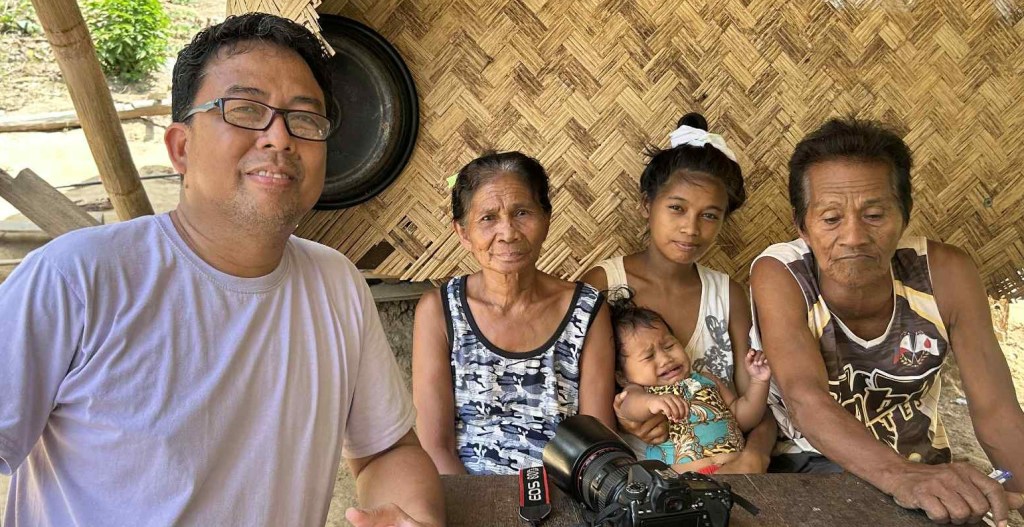
The Tagbanuas were the earliest known inhabitants of El Nido. This is because the ethnicity of the settlers in Dewil Valley 14,000 years ago and in Bacuit Bay 3,800 years ago has not yet been determined. One thing is certain: prior to the arrival of the Spanish colonizers, the Tagbanuas were already inhabiting the area.
When Spanish administrators and friars arrived in El Nido, they found Tagbanuas already living there. At that time, El Nido consisted of Tagbanua communities scattered around present-day Bacuit Bay, Sibaltan, and New Ibajay. The largest Tagbanua community upon their arrival was Batacalan, located in present-day Sitio Sta. Monica in Sibaltan, which the Spaniards renamed Sta. Monica. However, Batacalan was already in decline, while the Talindak community in present-day Langeb-Langeban was on the rise. Both were identified as Tagbanua communities. Talindak eventually became the town of El Nido that we know today, while Batacalan was reduced to a mere barrio of El Nido – present-day Sibaltan.
There were two Tagbanua sub-tribes documented by Spanish chroniclers: the Tandulanen and the Silanganen. The Tandulanen were described as hostile, still living a primitive way of life, and refusing to trade with the Spanish. The Silanganen, on the other hand, were the opposite. They were traders, literate, and adapted to the new way of life introduced by Spanish authorities. The Silanganen lived alongside Spanish authorities and Cuyonon migrants in settlement centers, especially in Batacalan and Talindak. Meanwhile, the Tandulanen packed their belongings and left when new settlers – the Spanish and Cuyonons – arrived. They transferred to remote islands or shores where they could live independently. This attitude has been confirmed by present-day Tandulanens.
The isolationist attitude of the Tandulanen proved beneficial, as it enabled them to preserve Tagbanua culture to this day. Being far from the authoritative reach of Spanish administrators and the dogmatic teachings of the friars, they maintained their animistic beliefs and rituals, most of their songs and dances, their way of life, and – most importantly – their language. Aside from language, another significant cultural element preserved by the Tandulanen was the epic of Dumarakol, which was still sung in New Ibajay in the 1960s or 1970s. In contrast, the Silanganen gradually lost their language, culture, and identity as Cuyonon migrants outnumbered them. The new way of life, beliefs, religion introduced by Spanish friars, and the dominant language of the Cuyonons eventually overwhelmed them.
Today, many Cuyonons in the municipality of El Nido still carry Silanganen blood, except for those who directly migrated from the island of Cuyo. Despite this, they identify themselves as Cuyonon. In 2018, the Community-Based Monitoring System (CBMS) implemented by the Municipal Planning and Development Office recorded the Tagbanua population at only 0.4% of El Nido’s total population, while the Cuyonons comprised the majority at 47.8%.
Although the Silanganen have lost their distinct identity, there is a need for the present generation to look back and study their footprint in history.

