
The founding of Bacuit as a municipality is traditionally believed to have taken place on March 16, 1916. This date is widely cited in articles and official publications about El Nido’s history. The primary reference for this information is the “Historical and Cultural Life of the Barrios and Town of Bacuit, Palawan,” an article submitted to the National Library of the Philippines in 1952 by Marcial Viray and colleagues. The article was part of a nationwide initiative to restore historical records lost during the destruction of the Legislative Building on February 1945, when American forces liberated Manila from Japanese occupation. After the building was restored in 1949, various localities submitted cultural and historical documents to replace the destroyed archives.
We made efforts to explore additional sources beyond the one submitted to the National Library in an attempt to verify the date. After months of searching, we were unable to locate any law from 1914 to 1916 that established Bacuit as a municipality. However, on January 21, 2025, we came across some old documents, thanks to Myra Lara, another archaeologist working at Dewil Valley, who provided helpful tips on how to locate old publications.
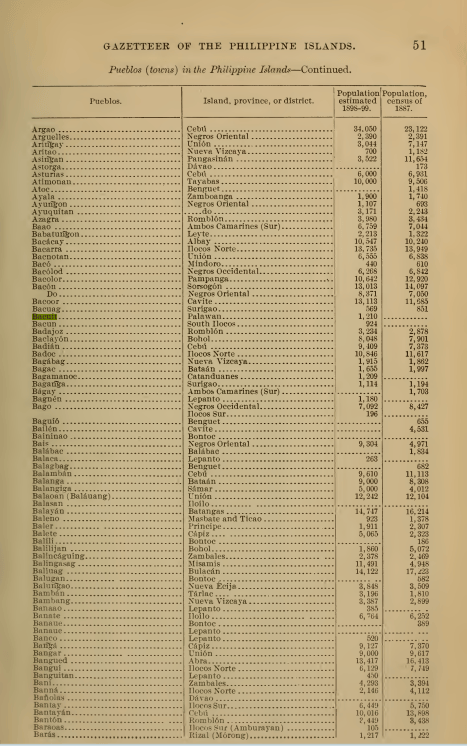
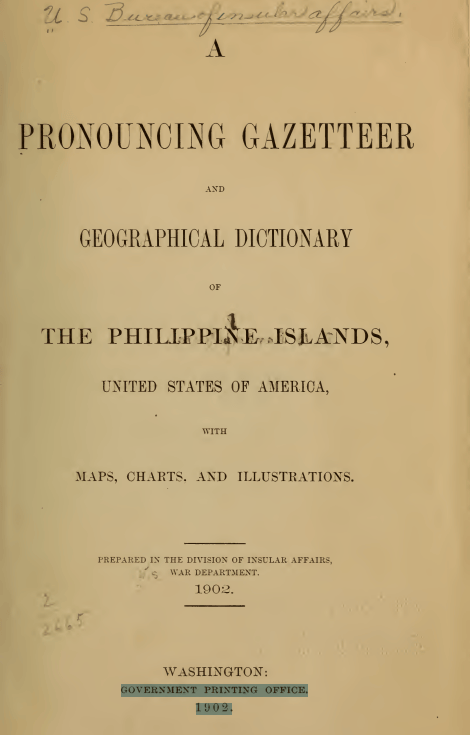
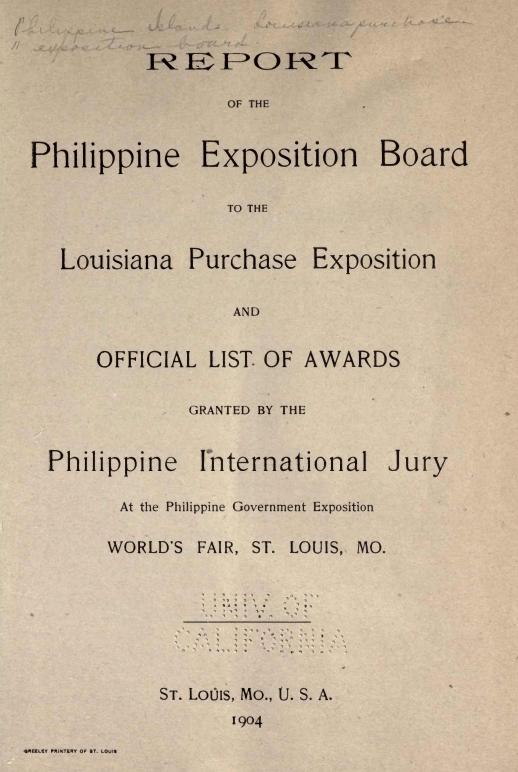
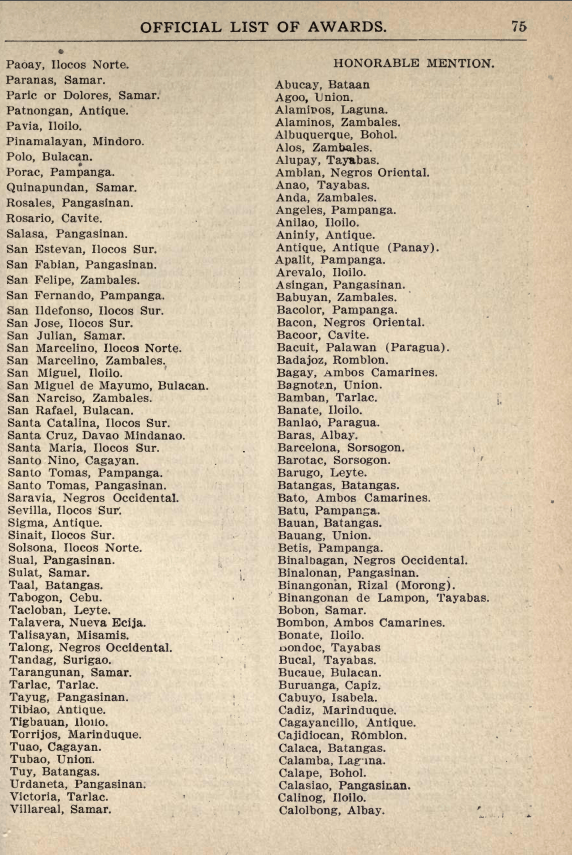
The recent discoveries invites us to re-evaluate this traditional account. The first one, a document with the title “A Pronouncing Gazetteer and Geographical Dictionary of the Philippine Islands, United States of America, with Maps, Charts, and Illustrations,” published in 1902, identifies Bacuit as a pueblo (town). In the second document, Bacuit was mentioned in the “Report of the Philippine Exposition Board to the Louisiana Purchase Exposition” published in 1904, where it, along with other municipalities, received an “Honorable Mention” award. These findings suggest that Bacuit may have been established as a municipality as early as 1902 or even earlier.
Marcial Viray and his co-authors, writing in the late 1940s to early 1950s, may have based their account on oral traditions that emphasized 1916 as a significant year. They may have mistakenly associated the installation of Adriano Abadiano as the first Filipino municipal president as coinciding with the founding of Bacuit as a municipality. This event (installation of the first municipal president) likely reflected the broader influence of the Jones Law, enacted by the United States Congress and signed by US President Woodrow Wilson on August 29, 1916, which allowed Filipinos to take leadership roles in the Philippine legislature and local government units.
The Jones Law was the first formal commitment by the U.S. federal government to grant Philippine independence. It granted the Philippine Legislature general legislative powers, although certain areas, such as immigration, currency, and public lands, remained under U.S. oversight. This legislation was a key component of the “Filipinization” process, which aimed to transition governance from American to Filipino leaders.
In addition to that, the Jones Law authorized provinces and towns to appoint Filipino officials, representing a significant step toward self-governance and eventual independence. This effort to include Filipino legislators and local officials was part of the broader Filipinization process, as discussed by Dayana Ariffin in her book, “The Censuses of the Philippine Islands: From Ethnological Inquiry to the Formalization of Racial Categories in the American-Occupied Philippines From 1903 to 1939.” Arrifin narrates that, “Filipinization is commonly understood to be an era from 1912 to 1916, which focused on increasing the number of Filipino officials in the government to gradually shift the responsibilities of administering the country from the Americans to Filipinos (Agoncillo 1974).”
The Filipinization period, which lasted from 1912 to 1916, coincided with the appointment of Bacuit’s first municipal president. According to Marcial Viray and his co-authors, Adriano Abadiano became Bacuit’s first municipal president, with Juan Castro serving as the first municipal vice president. Their accounts also mention that in 1937, Rosalio Castro became the first municipal mayor, with Lucio Dajon as vice mayor. Therefore, it seems that 1916 marked more of the realization of the consequences of the Jones Law in the municipality of Bacuit.
The discovery of the previously mentioned official documents raises the question: “When was the Municipality of Bacuit officially founded?” While 1902 is significant, as the documents recognize Bacuit as a town, they do not explicitly confirm its founding date, leaving the possibility that Bacuit’s origins date back even earlier. Nevertheless, 1916 remains an important milestone in the municipality’s history, marking the appointment of its first Filipino municipal president. At this point, further documents are needed to provide more clarity on the municipality’s founding.

